Kilns, Clay, Questions and Answers
Here’s a rundown of the studio expectations so that you can have a safe and wonderful creative experience!
We are a small studio, so we have to work smart to stay safe and have fun!
We want your time spent at Studio 228 to be enjoyable. We want to try and clarify what we can offer you when you sign up for an 8-week Semester.
We do have some limits due to time and space. It is our intention to try and clarify as much as possible so that no one is disappointed and that you have a clear understanding of what we can, and can not offer at this clay studio.
Keep in mind you are sharing this studio with 40+ people and we in turn are trying to accommodate the needs of this many people.
Can I bring my own clay?
No. We only allow clay that is purchased through our studio for the protection of the kiln. We fire at cone 6 and the clay body must be able to withstand this temperature. A lowfire clay would melt and ruin the kiln.
How many kilns do you have?
Two
What’s the size limit of my work?
9 inches. This has been determined by the size of the kilns and the number of pots we need to fire each week. If you wish to make bigger work we can refer you to someone that offers firing services.
How many pieces can I make in a semester?
20 pieces. We are a learning studio. We encourage quality and learning over quantity. We are not set up to accommodate production potters. If you wish to make additional pots we can refer you to someone that offers firing services.
What about re-firing my work?
We do not re-fire work. If a piece does not turn out to your satisfaction we are not able to refire it. This is due to a number of technical factors.
Can you bring your own glazes?
Yes, but they need to be checked by your instructor to verify they are cone 6 glazes. No lowfire glazes are allowed, because we only fire at cone 6.
Can you sell the work that you make here?
Your work is to do with what you wish.
What kind of Studio access do I get for the semester?
In addition to your class time you will have a 2-hour block of time available to you on Mondays. We are open 10-6pm and ask that you stay a maximum of 2 hours so that everyone can have an opportunity for practice time.
Do I have my own shelf?
Yes, each potter is assigned a designated shelf to store their work/supplies on.
Kiln Breakage? Do pieces sometimes not fire correctly or does it break?
Yes. There are no guarantees in pottery!
Is clay dust toxic?
Yes, We strive to offer a safe studio space. We do this by having the floors professionally wet-cleaned every other week. We also make sure that after each class everyone participates in cleaning up after themselves so that we minimize the accumulation of clay dust. We do not allow for dry sanding in the studio. If you must sand a fired piece, you have to go outside and sand over a trash can so that clay dust is not tracked into the studio.
Here is a great article explaining what you should be aware from an informed & safe way when working with clay.
The Three Stages of Clay
Creating something lasting with your hands is a process that that blends your own creativity with guided instruction, quality materials, and the transformative power of our kilns and glazes.
Step 1: Create
Every piece begins with an idea. You’ll start by deciding what you would like to make, then bring it to life in clay.
Step 2: Dry (Greenware Stage)
Once your piece is formed, it will rest under plastic for several days to dry slowly and evenly. At this stage, it’s known as greenware. It’s very fragile, but full of potential.
Step 3: First Firing (Bisque Stage)
Your dried piece is then fired in the kiln for the first time. This transforms it into bisque, making it stronger and ready to accept glaze.
Step 4: Glazing
Now comes the color and character. You’ll choose from our curated selection of glazes and learn how to apply them to your piece, adding depth and personality.
Step 5: Final Firing
Your work returns to the kiln for its final transformation. The heat fuses the glaze and clay together, revealing the finished piece which is durable, functional, and uniquely yours.
A Note on Shrinkage
Clay naturally shrinks during the firing process, typically around 10–15%. Below, you’ll see examples of each stage, along with what to expect as your piece transforms.
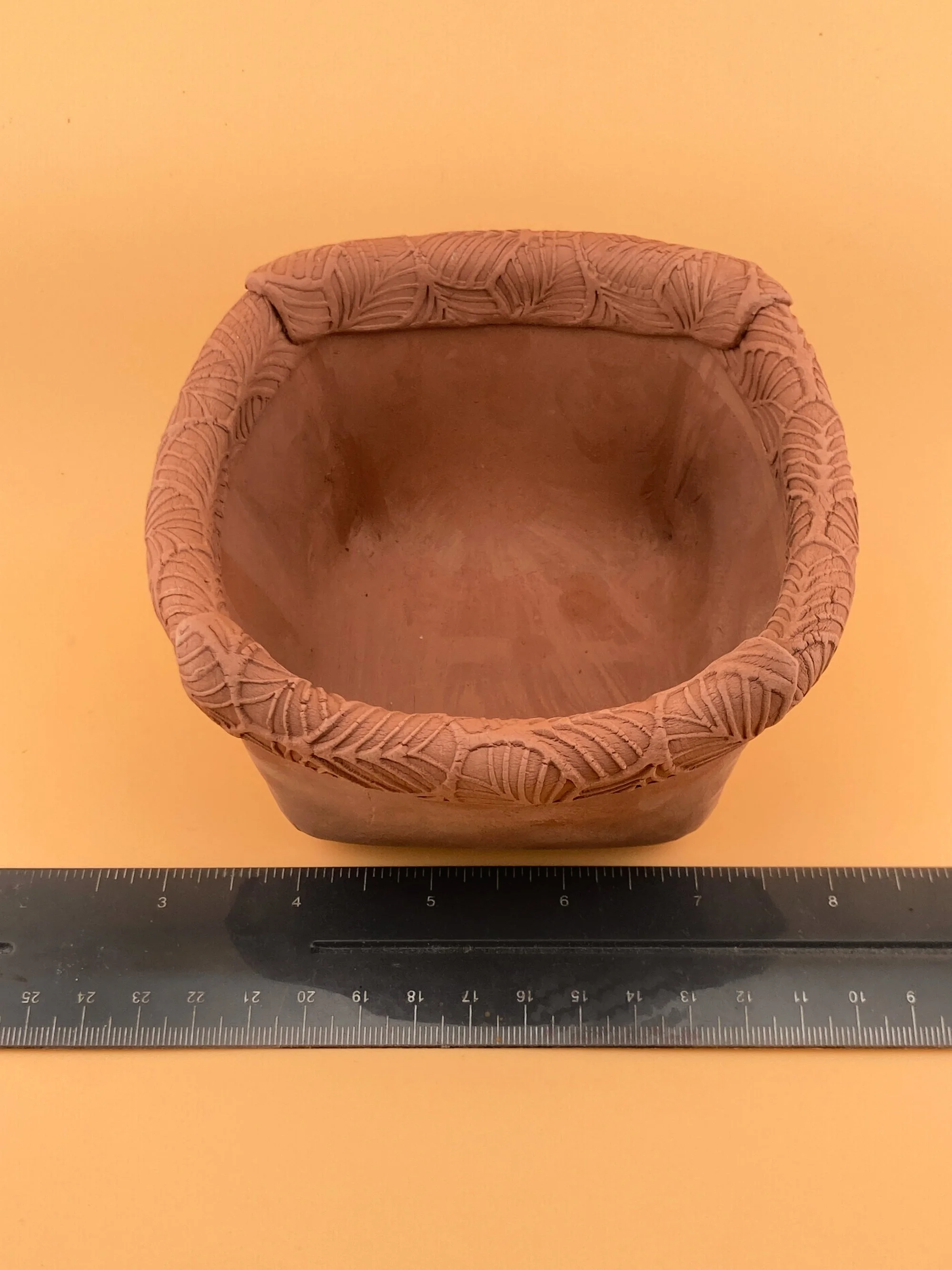
Dry (Greenware Stage)
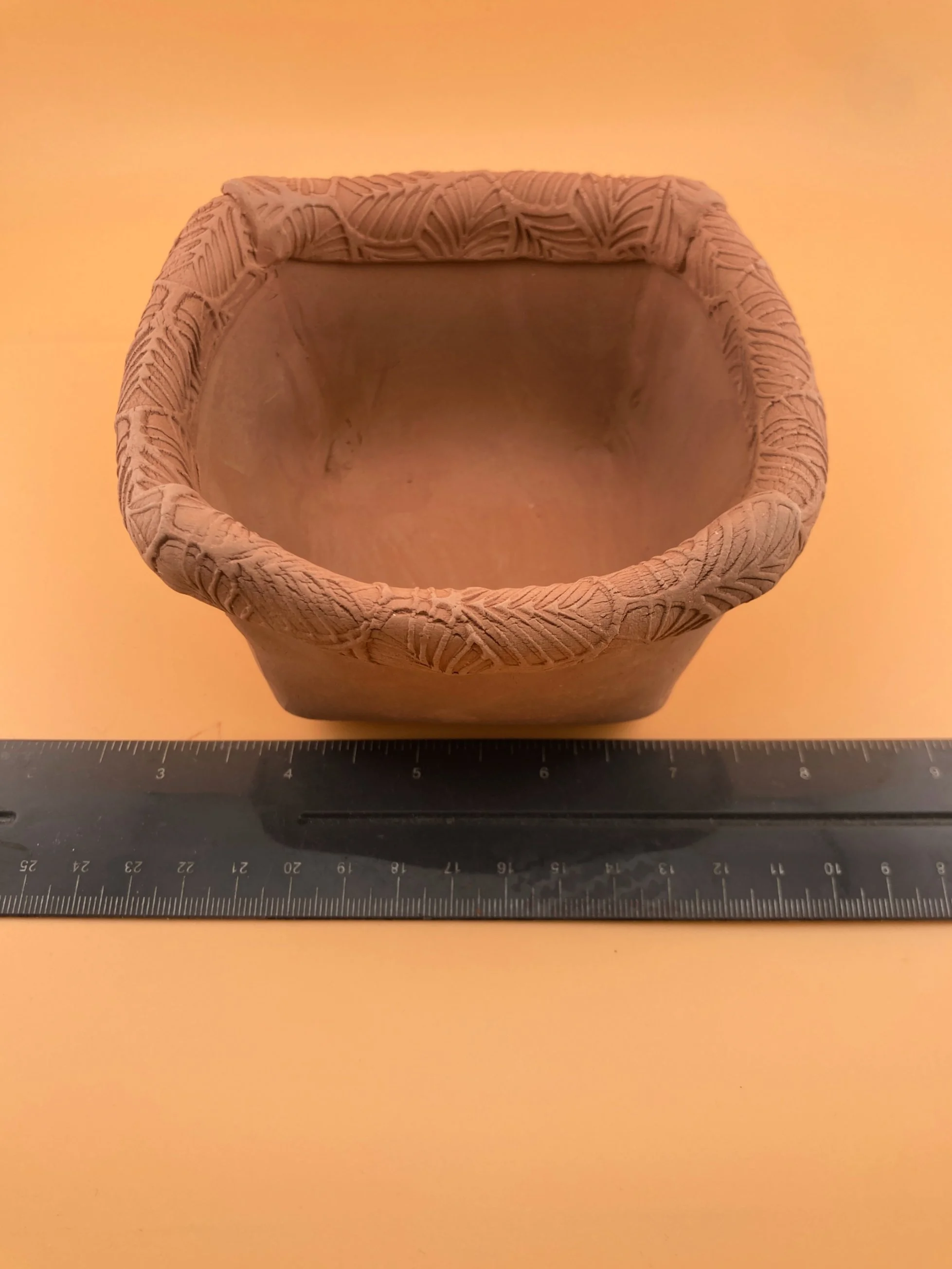
First Firing (Bisque Stage)